Introduction
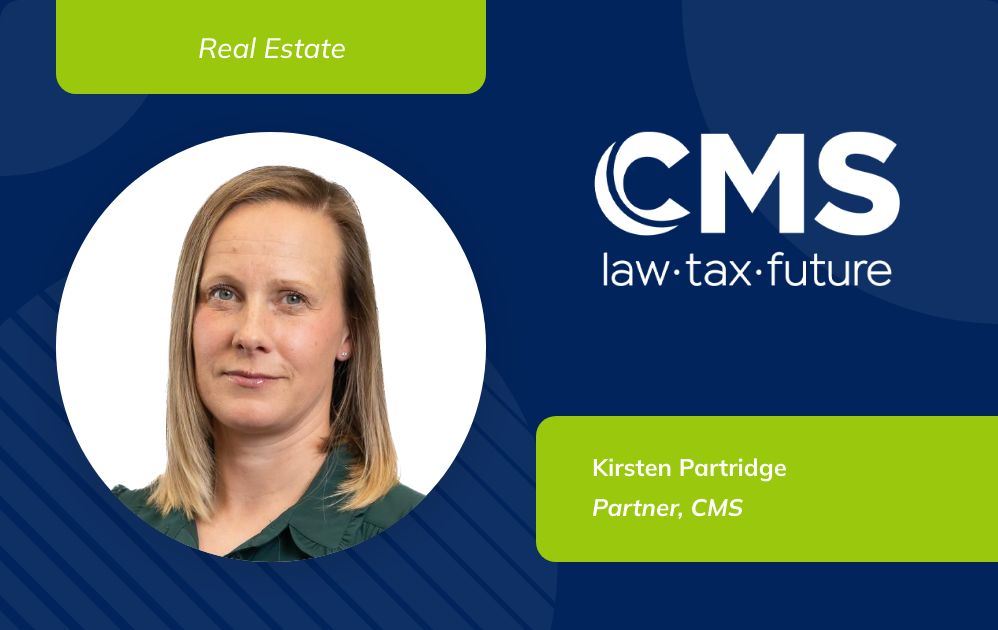
Kirsten Partridge is a Partner in the Real Estate team at CMS and the firm’s representative on the Property Standardisation Group (PSG), the body that produces and maintains the industry-standard documentation for Scottish commercial property transactions.
Her team were looking for a better way to handle high-volume asset management work. They had a clear set of requirements: faster drafting, consistent output, and documents that always reflected the latest PSG standards. This is the story of how they found the solution they were looking for.
About CMS
With more than 7,200 lawyers working across 90 offices and advising clients in more than 50 countries, CMS has longstanding expertise both in advising in its local jurisdictions and across borders. Within its Scottish practice, the Real Estate team advises on a broad range of matters, from portfolio management and asset management projects to complex commercial property transactions.
As a firm committed to delivering innovative legal services, CMS is continually exploring how technology can improve client service. However, successful adoption depends on more than simply implementing new tools. It’s also about understanding how they work, how reliable they are and ensuring lawyers can have confidence that the outputs they produce meet the quality, consistency and professional standards clients expect.
The challenge: price pressure, evolving standards, and the burden of maintenance
The Scottish commercial property market has seen significant downward pressure on fees for high-volume transactional work. Clients are aware that technology is available, and their expectations have shifted accordingly.
“Clients know that technology is available and they’re expecting firms to use it, not just from a cost perspective but to facilitate fast and efficient transactions.” - Kirsten Partridge, Partner, CMS
Scotland’s status as a separate legal jurisdiction within the UK adds a further layer of complexity. Scottish real estate practitioners work with a different set of legal processes and styles (precedents) from those used in England and Wales, and the PSG documents that underpin this work are constantly evolving.
“The PSG documents change so regularly. We get emails all the time saying, ‘Have you spotted this? Have you thought about this?’ They’re constantly evolving documents.” - Kirsten Partridge, Partner, CMS
For a busy real estate team, keeping pace with those changes, updating styles, testing amended templates, and maintaining client-specific variations, all create a significant overhead on top of day-to-day legal work. When CMS began evaluating automation options, two priorities quickly emerged:
- Accelerating document drafting and improving efficiency
- Ensuring every document reflects the latest PSG standards without requiring extensive internal maintenance
The solution: the only automated suite built for the Scottish real estate market
The search led CMS to the Clarilis PSG Suite, the only commercially available external solution that combines PSG-standard styles with a fully managed drafting automation product.
Covering more than 50 documents, including leases, asset management documentation, offers to sell and a full range of ancillary materials, the suite is built directly from PSG-approved styles. Lawyers work through a structured questionnaire to produce draft documents based on the latest PSG drafting. Because the automation follows a defined set of rules and logic rather than the variable output of GenAI tools, the outputs are reliable, and the decision-making is transparent: lawyers can understand exactly how each document has been produced and have confidence in the output.
Unlike technologies that rely solely on GenAI, Clarilis uses defined rules and logic. This gives lawyers transparency into how documents are generated and confidence that outputs can be reviewed, understood and validated. GenAI use within the Clarilis platform is confined to novel or deal specific drafting.
That transparency was a key consideration for CMS. As Kirsten explains:
“I think how we will train our junior lawyers is going to change considerably in the future. You have to train your junior lawyers in terms of understanding how the automation works, how the logic changes based on how the questionnaire is answered, so they know what it’s doing in the background.” - Kirsten Partridge, Partner, CMS
Critically, the responsibility for keeping the automation up-to-date sits with Clarilis, not with CMS. As the PSG documents evolve, Clarilis incorporates the updates and undertakes the testing required to ensure everything continues to draft as intended. For CMS, this removes an entire category of internal maintenance work - no manual change-tracking, no version management across multiple document variants, no precedent library upkeep.
The result: more time for the work that matters
For CMS, the goal was never simply faster drafting. The firm wanted technology that would reduce administrative work and allow lawyers to focus on the expertise, judgement and client advice that create the greatest value.
"It gives you more time to actually do the bit that we really get paid to do, that we're actually trained to do," says Kirsten.
That value is underpinned by confidence in the quality and consistency of the documents being produced.
“I know if somebody logs on to the Clarilis platform and uses that, then they’ve taken the most up-to-date version of that document. As long as the right information is entered, the drafting is applied consistently and correctly. That gives us confidence that the document produced is both current and aligned with the drafting choices we’ve made.” - Kirsten Partridge, Partner, CMS
By combining industry-standard documentation with managed automation, the platform helps lawyers work more efficiently while ensuring they always have access to the latest approved drafting.
The platform also supports lawyer development. It enables junior lawyers to build drafting knowledge within a structured environment where the underlying logic is clear and consistent. This not only strengthens understanding of the drafting process but also simplifies supervision by providing a standardised framework for review.
Rather than replacing legal expertise, automation helps create consistency across high-volume work while ensuring lawyers remain responsible for the legal decisions that matter.
In a team handling high volumes of asset management work, the cumulative effect is significant - faster turnaround, reduced risk of outdated precedents reaching clients, and lawyers at every level able to focus on the judgement and advice that genuinely require their expertise.
Looking ahead: Technology and legal expertise working together
The experience that CMS have had with the Clarilis PSG Suite illustrates what effective legal technology adoption looks like in practice: a specific solution to a specific problem, chosen because it addresses real operational pressures and meets the professional standards the firm’s lawyers and clients depend on.
For Scottish real estate teams facing the same combination of fee pressures and a desire for consistency, CMS are a compelling example of how the right technology can combat these issues and free lawyers to spend more time doing what they do best.
Most importantly, it shows how technology can reinforce, rather than replace, legal expertise. As the next generation of lawyers enters an increasingly technology-enabled profession, that combination of efficiency, consistency, control and professional judgement will become ever more important.
Learn more about how Clarilis can transform your real estate drafting.